
TheDigitalBackbone
Independent research on the physics, capital, and politics of orbit. Launch economics, orbital spectrum, propulsion, and the sovereign stacks most coverage never reaches.
The Library · 10 Dispatches
Latest dispatches
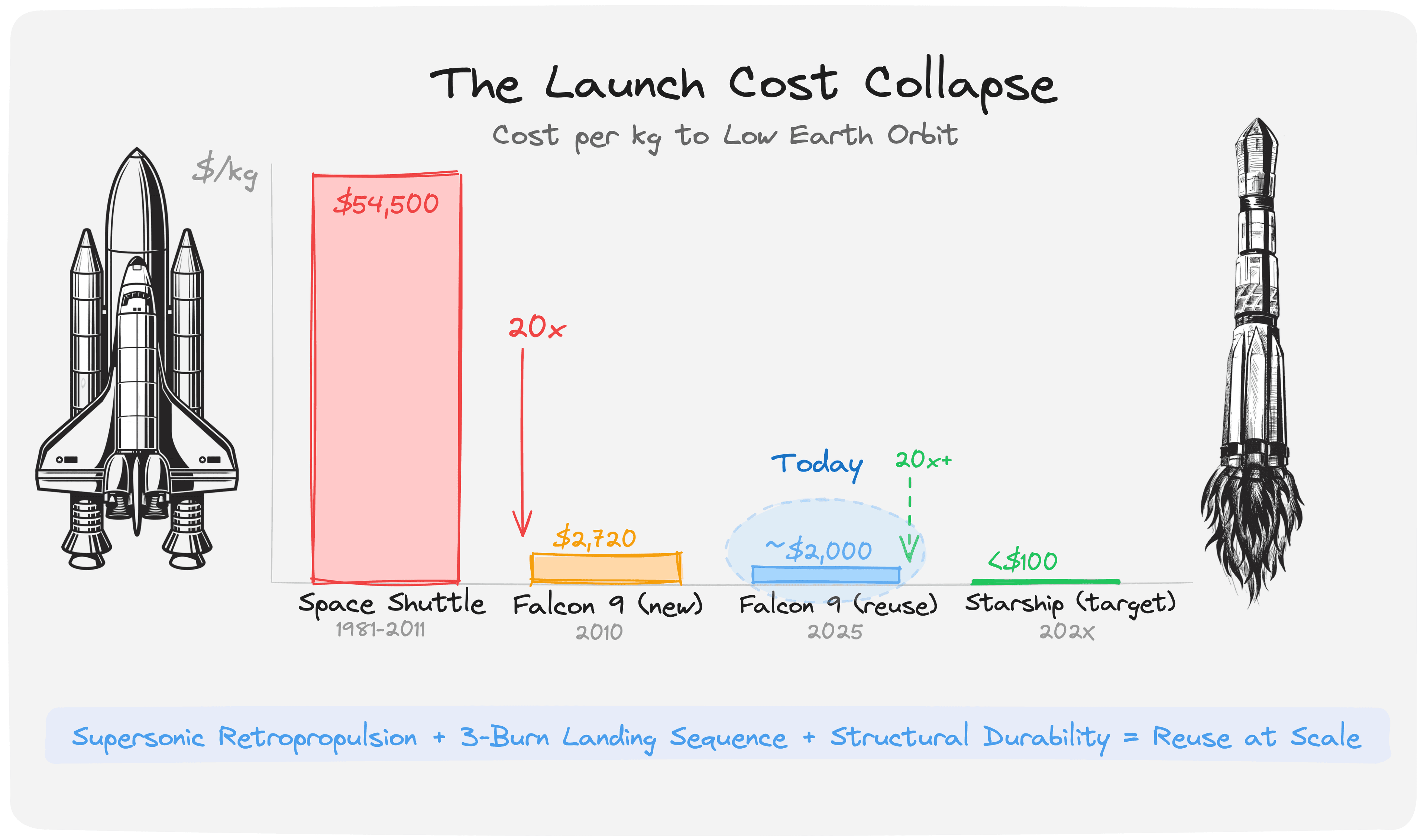
SpaceX's 33rd booster landing and the compounding cost curve
SpaceX just landed a booster for the 33rd time. For decades, the industry didn't think reuse was worth the trade-off at all.
Mar 10, 202662,000+ impressions
Read dispatch →01 / 10
Vol. 01 · 2026
The biggest infrastructure buildout in history is underway — from the ground to orbit. We go inside the engineering, the capital, and the companies most coverage never reaches.
That's the podcast.
That's The Digital Backbone.

Bryan Tarras
M.Eng.Five years on the internal hedge fund desk at one of Canada's largest pension funds. Helped design and manage a $3B activist and SMID-cap portfolio across TMT, space tech, and digital infrastructure. Infrastructure engineer before that. AI operator at Boosted.ai. Now publishing independent research on the companies building the orbital economy.
The narratives follow the physics... eventually. We start there.
The podcast.
Coming soon.
Operators, engineers, and capital allocators on the infrastructure being built above the atmosphere — and who captures the value. No press releases.
The orbital economy,
in your inbox.
Long-form analysis. Engineering depth. Institutional context.